
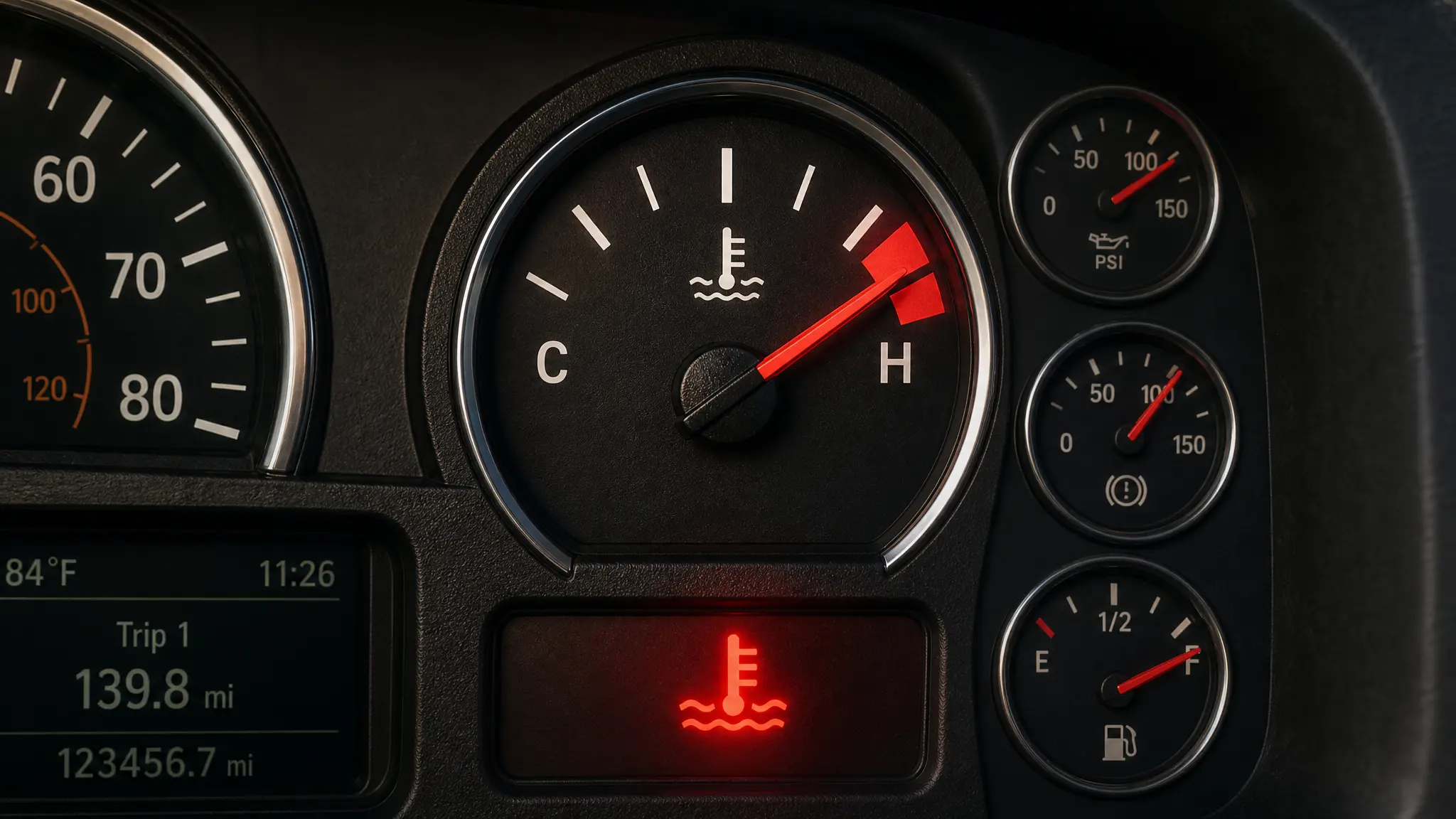

You’re southbound on I-5, somewhere between Fife and Federal Way, fully loaded and making good time — and then you see it: the temperature gauge climbing past normal, the warning light, maybe even steam from under the hood.
A truck overheating on a major interstate is one of the most stressful situations a driver can face. Every minute of inaction can lead to thousands of dollars in engine damage. Every minute of wrong action can do the same — or worse.
This guide explains what causes overheating, what to do in the first five minutes, and how PTT Repairs can help get your truck safely back on the road.
Why Overheating Is Never “Just a Temperature Gauge Problem”
A diesel engine in a modern semi truck operates within a precise temperature range — typically between 180°F and 200°F or 82°C–93°C. The cooling system is designed to keep the engine in that range, whether it’s a cold January morning or a hot August climb.
When the cooling system fails, even partially, temperatures can rise to 240°F, 250°F, or higher within minutes. At those temperatures, serious damage can happen fast:
- ✅ Cylinder head gaskets can warp or blow — one of the most expensive overheating consequences.
- ✅ Aluminum components can crack — including cylinder heads, intake manifolds, and coolant passages.
- ✅ Engine oil can break down — heat destroys viscosity and accelerates wear on moving parts.
- ✅ Turbocharger bearings can seize — turbochargers spin at extremely high RPM and can fail quickly during heat-related oil flow issues.
The difference between catching overheating early and driving another 20 miles can be the difference between a minor repair and a full engine rebuild.
The 7 Most Common Causes of Truck Overheating
1. Low Coolant Level
Low coolant is one of the most common and preventable causes of truck overheating. Coolant carries heat from the engine to the radiator. When coolant is low, heat transfer is reduced, and engine temperature rises.
Low coolant usually points to one of these issues:
- A slow external leak: Look for dried coolant residue, often green, orange, or pink, around hose connections, the radiator, or the water pump.
- An internal leak: Coolant may enter the combustion chamber through a failing head gasket. Watch for white or grey smoke and a sweet smell from the exhaust.
- Evaporation over time: Less common in a closed system, but possible in older trucks or with a failing pressure cap.
Fix: Top up coolant immediately, but only with the correct coolant type for your engine. Using the wrong formulation can cause a chemical reaction inside the cooling system. Always check the reservoir when the engine is cold — never when hot.
2. Thermostat Failure
The thermostat is a small valve that regulates coolant flow based on engine temperature. When it fails, it can stick in one of two positions:
- Stuck closed: Coolant cannot circulate to the radiator, causing the temperature to rise quickly.
- Stuck open: Coolant circulates constantly, preventing the engine from reaching proper operating temperature. This can reduce fuel economy and cause poor cab heat in winter.
A stuck-closed thermostat is especially dangerous because the engine can go from normal temperature to critical in just minutes.
Fix: Thermostat replacement is one of the less expensive cooling system repairs. Catching the issue early can prevent major engine damage.
3. Failing Water Pump
The water pump is the heart of the cooling system. It circulates coolant through the engine, radiator, and heater core. When it fails, coolant stops moving properly, and temperatures begin to climb.
Warning signs of water pump failure include:
- Coolant leaking from the weep hole beneath the pump.
- Grinding or whining noise from the front of the engine.
- Coolant visible around the pump housing.
- Overheating at idle, while temperature stays normal at highway speed.
Fix: Water pump replacement on a semi truck is a significant repair, but it is still far less expensive than the engine damage caused by ignoring the problem.
4. Clogged or Damaged Radiator
The radiator removes heat from the coolant and transfers it to outside air. Over time, radiator fins can collect road debris, bugs, dirt, and dust. Internally, scale and sediment can block coolant passages.
In Pacific Northwest driving conditions, especially routes through eastern Washington during summer, radiators can accumulate debris faster than many drivers realize.
Common signs of a radiator issue include:
- Overheating at slow speeds or in stop-and-go traffic.
- Normal temperature at highway speed.
- Visible debris blocking the external fins.
- Rust or discoloration in the coolant reservoir.
Fix: External radiator cleaning is a simple preventive maintenance service. Internal flushing removes sediment and scale. A damaged or severely corroded radiator may require replacement.
5. Broken or Loose Fan Belt / Clutch Fan Failure
The cooling fan pulls air through the radiator when the truck is not moving fast enough for natural airflow to do the job. The fan may be driven by a belt or controlled by a clutch fan that engages based on temperature.
If the belt breaks, slips, or the fan clutch fails, the truck can overheat in traffic, at idle, or on grades — even if the rest of the cooling system is working properly.
How to identify this issue:
- Overheating mainly at low speeds, idle, or in heavy traffic.
- Cooling fan spinning slower than normal or not engaging when warm.
- Squealing belt noise from the engine bay.
- Visible belt wear, glazing, or cracking.
Fix: Belt replacement is usually quick and inexpensive. Fan clutch replacement is more involved, but still much cheaper than a blown head gasket.
6. Head Gasket Failure
Sometimes overheating is not caused by a cooling system component. Instead, the head gasket itself may be failing, and overheating is the symptom.
The head gasket seals the cylinder head to the engine block. When it fails, combustion gases can enter the cooling system, or coolant can enter the combustion chamber.
Warning signs of a failing head gasket include:
- White or grey sweet-smelling smoke from the exhaust.
- Bubbles in the coolant reservoir while the engine is running.
- Milky or frothy oil appearance.
- Rapid coolant loss with no visible external leak.
- Overheating that returns after topping up coolant.
Fix: Head gasket replacement is a major repair on a semi truck engine. However, catching the problem before the cylinder head warps can save thousands of dollars in machining costs. Do not continue driving with these symptoms.
7. Air Pockets in the Cooling System
Air pockets are less common but often overlooked. Trapped air can prevent proper coolant flow through part of the engine, causing localized overheating even when coolant levels appear normal.
Air pockets usually enter the system after maintenance such as a coolant flush, thermostat replacement, or water pump replacement if the system was not properly bled afterward.
Fix: Bleeding the cooling system removes trapped air and restores full coolant circulation. This should be done by a trained technician.
What To Do Right Now If Your Truck Is Overheating on I-5
If your temperature gauge is climbing or your warning light is on, follow these steps immediately:
Step 1: Don’t panic. Get off the road.
Signal immediately and move to the right shoulder. Continuing to drive under load while the engine is overheating can dramatically increase damage.
Step 2: Turn off the A/C and turn on the heater full blast.
This may sound strange, but the cabin heater works like a small heat exchanger. Turning the heater on maximum can help pull heat away from the coolant and may buy you a few minutes to reach a safe stopping point.
Step 3: Let the engine idle briefly — do not shut it off immediately.
Allow the engine to idle for 2–3 minutes so temperatures can stabilize. Turning off a severely overheated engine immediately can create steam pockets and thermal shock.
Exception: If you see flames or smell burning electrical components, turn the engine off immediately.
Step 4: Pop the hood, but do not open the radiator cap.
Let air circulate around the engine. Never open the radiator cap while the engine is hot. The system is under pressure, and hot coolant or steam can cause serious burns. Wait at least 30–45 minutes or until the engine is fully cool.
Step 5: Check what you can safely check.
Once the engine is cool, visually inspect for obvious problems: visible coolant leaks, broken belts, or an empty coolant reservoir. This information can help the repair shop diagnose the problem faster.
Step 6: Call PTT Repairs.
📞 Call / Text 24/7: +1 (206) 929-5032
PTT Repairs is located at 1050 Butte Ave SE, Pacific, WA 98047 — less than 20 minutes from many I-5 breakdown points between Tacoma and Seattle. We can help determine whether it is safe to drive to the shop or whether you need a tow.
I-5 Breakdown Near Tacoma: Know These Landmarks
If you are broken down on I-5 and need to describe your location, use nearby landmarks to help the shop or tow operator find you faster.
| Your Location | Distance to PTT Repairs | Approx. Tow Time |
|---|---|---|
| Fife / Port of Tacoma | ~8 miles | 15–20 min |
| Federal Way / SR-18 Junction | ~12 miles | 20–25 min |
| Auburn / SR-167 Junction | ~5 miles | 10–15 min |
| Sumner / SR-410 | ~7 miles | 15 min |
| Puyallup / SR-512 | ~10 miles | 20 min |
| JBLM / Joint Base Lewis-McChord | ~18 miles | 25–30 min |
Nearest towing services: When you call us, we can recommend tow operators we regularly work with who already know our shop location. A coordinated tow is often faster than cold-calling the first company in a search result.
Cooling System Preventive Maintenance: Stop Overheating Before It Starts
The best overheating situation is the one that never happens. Regular cooling system maintenance can prevent breakdowns, engine damage, and expensive downtime.
| Service | Recommended Interval | Why It Matters |
|---|---|---|
| Coolant level check | Every pre-trip | Catches slow leaks before they become critical. |
| Coolant condition test | Every 6 months | Tests freeze point, pH, and inhibitor levels. |
| Full coolant flush | Every 2 years / 200,000 miles | Removes scale and restores corrosion protection. |
| Thermostat replacement | Every 3 years preventively | Cheaper than failure-related engine damage. |
| Radiator external cleaning | Every 3–6 months on WA roads | Pacific Northwest debris accumulates quickly. |
| Belt inspection | Every 50,000 miles | Catches wear before breakage. |
| Water pump inspection | Every 100,000 miles | Checks for weep hole seepage and bearing play. |
PTT Repairs offers a full cooling system inspection and service package covering the key items above in a single scheduled visit. Fleet operators can set up recurring service intervals so nothing slips through the cracks.
Frequently Asked Questions About Truck Overheating
Q: Can I drive my truck if it’s overheating?
A: No. Even a few minutes of driving with an overheating engine can warp cylinder heads or blow a head gasket. Pull over immediately, let the engine cool, and call for service. A tow is usually the safest choice.
Q: How long should I wait before opening the radiator cap?
A: Wait at least 30–45 minutes after the engine is turned off, or until the radiator is cool to the touch. Never open the cap on a hot engine because pressurized coolant can cause serious burns.
Q: My temperature gauge went back to normal. Is it safe to keep driving?
A: Not without knowing why it spiked. Temporary normalization may mean coolant is circulating intermittently, but the underlying issue could still be present. Get the truck inspected before your next trip.
Q: How do I know if my head gasket is blown from overheating?
A: Look for white or sweet-smelling smoke from the exhaust, coolant loss without visible leaks, milky oil on the dipstick, or bubbling in the coolant reservoir. If you see any of these symptoms, stop driving and call a repair shop immediately.
Q: Does PTT Repairs offer same-day service for overheating repairs?
A: For many cooling system repairs — including thermostat replacement, coolant flush, water pump service, and belt replacement — same-day service may be available. Call ahead so we can verify parts availability for your truck’s make and model.
Q: What truck brands does PTT Repairs service?
A: We service Freightliner, Kenworth, Peterbilt, Volvo, International, Mack, Western Star, and most other commercial truck makes.
Get Your Truck Back on the Road — PTT Repairs, Pacific WA
PTT Repairs specializes in semi truck and trailer repair for owner-operators and fleet companies across the greater Tacoma, Seattle, Sumner, and Pacific, WA area.
- 📞 Call / Text 24/7: +1 (206) 929-5032
- 📧 Email: info@pttrepairs.com
- 📍 Address: 1050 Butte Ave SE, Pacific, WA 98047
- 🌐 Book Online: pttrepairs.com/appointment
Services related to this article:
- ✅ Cooling System Inspection & Service
- ✅ Computer Diagnostics & Fault Code Analysis
- ✅ Engine Repair
- ✅ Preventive Maintenance Packages
- ✅ DOT Inspection
We serve: Pacific · Tacoma · Seattle · Sumner · Auburn · Kent · Federal Way · Renton · Puyallup · Fife
PTT Repairs is a licensed commercial truck and trailer repair facility in Pacific, Washington. All cooling system work is performed by trained technicians using professional diagnostic and pressure-testing equipment.